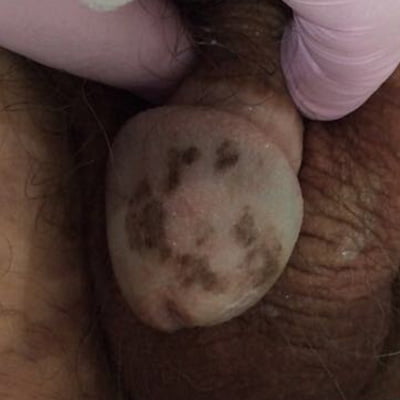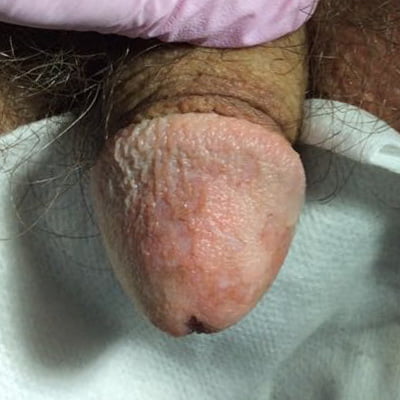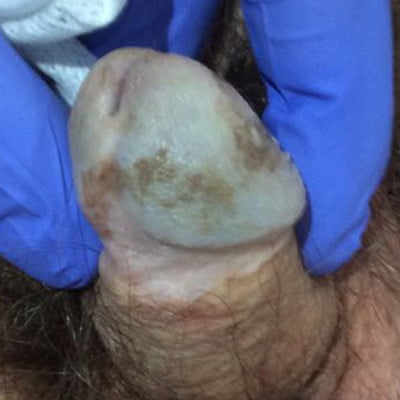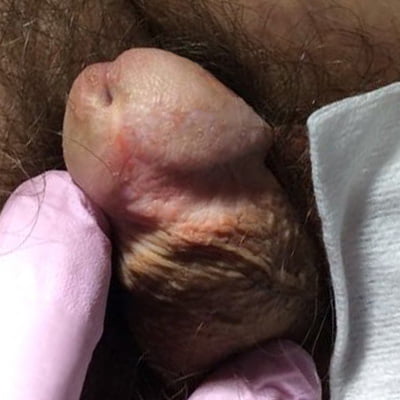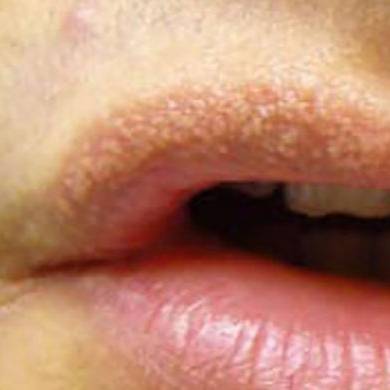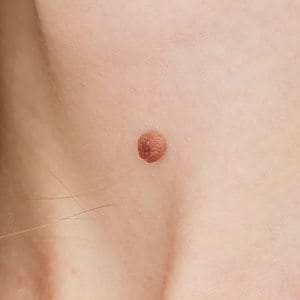
Penis scar removal in London involves using the CO2 laser or specialised treatment protocol to effectively rejuvenate the male intimate area. Many males are left with scars following circumcision, surgery or injury. We can treat preputial scarring, scar tissue between the tip of the penis and the inside of the foreskin. We can also treat pigmented scars. Treatment is done using numbing cream or local anaesthetic to help keep you comfortable. Some scars need only one session, but larger or deeper scars may need more than one. We use the DEKA SmartXide Touch CO2 laser to help improve how scars look. Depending on your scar, other treatments may be discussed at your consultation with our urology surgeon.
What causes genital scarring in men?
Genital scarring is more common than many men realise. It is also something many patients feel uneasy raising with their GP. A scar on the penis, foreskin or scrotum forms when the skin is injured or inflamed. It then heals with firmer, less stretchy tissue. Common causes include:
- circumcision or other surgery to the penis or foreskin (see also our circumcision scar removal page)
- tears, friction injuries or accidental cuts, including tears to the frenulum (the band of skin on the underside of the head of the penis)
- having lesions removed or other procedures in the area
- inflammatory skin conditions such as lichen sclerosus, which can cause tightening and white, scar-like patches (read more about lichen sclerosus in men)
- past infection or inflammation of the foreskin or glans that has healed with scarring
You may have a new mark, lump or patch on the penis that is changing, painful or bleeding. If so, a doctor should check it before any cosmetic treatment is considered. The same applies if you are simply unsure about it. Consultations for penile scars take place at our Harley Street clinic in London with our urology surgeon, Mr Richard Viney. He will examine the area, confirm what type of scar it is and explain which options may be suitable for you.
Treatment Areas
Treatment Benefits
Penile scars resulting from various factors, such as circumcision, preputial issues, pigmented scars, or adhesions, can have both physical and psychological impacts. The DEKA SmartXide Touch CO2 laser can be used to treat penile scars, offering patients a precise, minimally invasive option for scar revision.
Penile scars can occur due to different reasons, including circumcision, preputial conditions, pigmented scars, or adhesions. These scars may lead to discomfort, reduced sensitivity, and aesthetic concerns, impacting a man’s self-esteem and overall quality of life.
The DEKA SmartXide Touch CO2 laser is a medical laser that can treat concerns in male intimate areas. Using laser technology, it delivers precise and controlled energy to the treatment area, allowing the scar tissue to be targeted while limiting the effect on the surrounding skin. The procedure itself is short, only lasting for around 10-30 minutes, done under local anaesthesia.
Penile scar treatment process
- Consultation and Assessment: A comprehensive consultation with our Urology surgeon, Mr Richard Viney will be conducted to assess the type and extent of penile scarring. This assessment will help determine the most suitable treatment plan. We may recommend a specilised protocol involving injections, rather than using the CO2 laser.
- Anaesthesia: Topical or local anaesthesia may be applied to ensure your comfort during the procedure. Prior to your treatment, we will also conduct a patch test.
- Laser Application: The DEKA SmartXide Touch CO2 laser is then carefully applied to the specific areas of penile scarring. The laser technology creates micro-injury to the skin, promoting collagen remodelling and stimulating the body’s natural healing process. Over time, the skin heals and remodels, which may improve the texture and look of the scar.
- Precision and Safety: The advanced technology of the DEKA SmartXide Touch CO2 laser allows for precise control over the depth and intensity of the laser, which helps reduce the risk of side effects. As with any laser procedure, there are some risks, including changes in skin colour and a small risk of scarring.
Types of genital scars
- Hypertrophic scars (raised)
- Atrophic scars (indented)
- Keloid
- Hyper pigmented scars
- Hypo pigmented scars
Penile Scar Removal Benefits
- Precision: The laser’s technology enables precise targeting of scar tissue, while limiting the effect on surrounding skin.
- Minimal Downtime: Compared to traditional surgical methods, CO2 laser treatment typically involves minimal downtime, allowing patients to resume their regular activities sooner.
- Reduced Discomfort: The controlled application of laser energy minimises discomfort during and after the procedure. Our specialists can advise you on the correct protocol to follow after the procedure to further reduce discomfort during the healing period.
- Improved look: The stimulation of collagen production promotes smoother and more aesthetically pleasing skin.
Penis scar removal in London on Harley Street
At our Harley Street clinic, the DEKA SmartXide Touch CO2 laser is one option that may help improve how penile scars look, including circumcision scars and pigmented scars. Your surgeon will advise whether it is suitable for you at your consultation.
After treatment, the area may be sore and a scab will form while it heals. We will give you clear aftercare advice to support healing.
Patient Confidentiality
At Eve Clinics, patient confidentiality is of the utmost importance. All personal and medical information shared during consultations and treatments is kept strictly confidential. We follow careful privacy and data protection procedures to keep your information secure. Check this link to see how your data is protected.
Patient Confidentiality
At Eve Clinics, patient confidentiality is of the utmost importance. All personal and medical information shared during consultations and treatments is kept strictly confidential. Our clinic adheres to the highest standards of privacy to ensure a secure and comfortable experience for every individual seeking private area treatments.
Frequently Asked Questions
Different Scars on the penis
Penile scars from circumcision, surgery or injury, including some pigmented scars, may be improved with treatment. Adhesions and other foreskin conditions need to be assessed by our urology surgeon, who will advise on the right option for you.
Scars on the head of the penis (glans)
The skin of the glans is thin and sensitive, so scars on the head or tip of the penis are treated with extra care. Your treatment may be spread over more than one session so the area is not overtreated. Your surgeon will explain what is realistic for your scar at consultation.
Foreskin scars and scar tissue
Scar tissue on the foreskin can make it feel tight or less stretchy. Sometimes it forms where the inner foreskin has become stuck to the glans (preputial adhesions). The right approach depends on how the foreskin moves and whether there is an underlying skin condition. That may be CO2 laser, injection-based treatment or a different approach altogether. Your surgeon will assess this at your consultation.
Raised, hypertrophic and keloid scars
Hypertrophic scars are raised, firm scars that stay within the edges of the original wound. Keloid scars grow beyond the original injury. For raised or lumpy scars, injection-based treatment is usually used first to soften and flatten the scar tissue. Laser may then be considered, as explained in our FAQs.
Indented and discoloured scars
Atrophic scars sit below the level of the surrounding skin. Scars can also be darker (hyperpigmented) or lighter and white (hypopigmented) than the skin around them. CO2 laser aims to help the skin remodel its collagen and improve its texture. Pigmented scars may need a combination of treatments. Results vary from person to person. You can book a confidential consultation or see our price list.