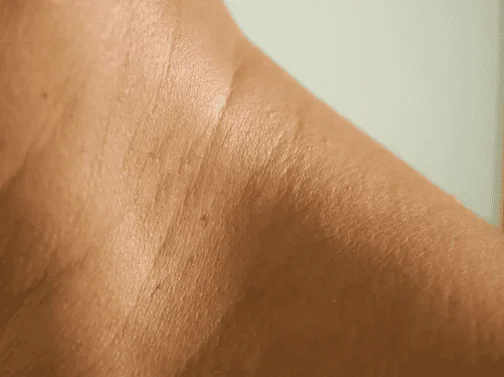

Skin tags are usually harmless, small growths on the skin often found on parts of the body where friction is present, such as the neck, armpits, groin, under the breasts and even sometimes the eyelids. They vary in size but are often only a few millimetres in diameter. There are a number of options to remove skin tags. From our Leamington Spa clinic we offer skin tag removal with the DEKA SmartXide Touch CO2 laser. We use a numbing cream for comfort, and the risk of scarring is low.
Skin tags are a common skin concern, often appearing on the neck, eyelids and armpits. Some people choose to have them removed for comfort or appearance. Found as small, soft, stalks protruding out of the skin, skin tags can appear on all skin types and are usually harmless. Any new or changing growth should still be checked by a medical professional. Skin tags do not usually cause pain, however discomfort and bleeding can occur if clothing or jewellery gets caught on them.
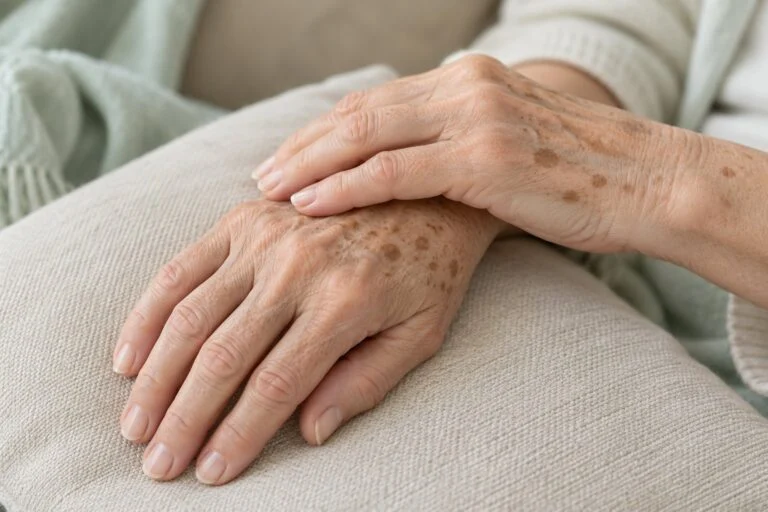
The exact cause of skin tags is not fully understood, but they are linked to skin rubbing against skin in folds. They are more common as we get older, in people who are overweight and in people with type 2 diabetes. Skin tags are made up of loose collagen fibres, the natural occurring protein responsible for healthy joints and skin elasticity.
How do skin tags form? They form in skin folds where the skin rubs against itself. Normally skin tags do not disappear without treatment which is why we offer skin tag removal in Leamington Spa with the DEKA SmartXide Touch CO2 ablative laser.
Skin tags can be removed quickly with very little downtime. Unlike surgical removal, the laser does not involve cutting with a scalpel, and bleeding is usually minimal. Other options include freezing (cryotherapy) or cautery. Every method, including laser, carries some risk of changes in skin colour, and we will discuss which option is most suitable for you. Skin tag removal treatments are not available on the NHS as they are most often removed for cosmetic reasons. You should never attempt to remove skin tags yourself at home, please take the advice of a medical professional.
The DEKA SmartXide Touch CO2 laser can remove a skin tag in a matter of minutes. It is precise, so it can target the skin tag while limiting the effect on surrounding skin. With suitable eye protection, it can also be used for some skin tags on or near the eyelids. Your suitability is assessed at consultation.
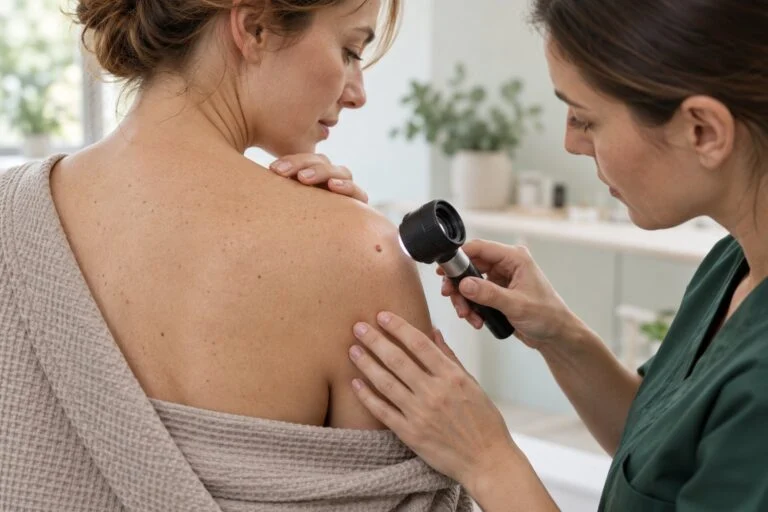
Prior to treatment, a medical consultation and assessment is needed to ensure the skin lesion is not suspicious. You will also receive all of the relevant aftercare information and the estimated number of sessions needed to remove the skin tag. After the go ahead from our laser specialist, we apply a numbing cream to make the treatment more comfortable. Depending on the number of skin tags to be removed, the procedure will take between 5 and 15 minutes. We aim to remove the entire skin tag during treatment, to reduce the chance of it coming back. Removal can be used on many skin types, and your suitability is assessed at consultation. Downtime is usually minimal, and most people return to work and normal activities straight away. You may have some slight swelling or redness, which typically settles over a few days.
Skin tag removal at our Leamington Spa clinic is performed by our experienced laser specialists or one of our doctors. Our team has many years of combined experience in skin lesion removal.
We use the DEKA SmartXide Touch, a CO2 laser system designed for skin resurfacing and lesion removal.
We offer free revisions for up to 3 months if there is any reoccurrence of the lesion. If scarring occurs, we also offer scar management treatments that may help improve its appearance. Any costs will be explained in advance. Please see the scar management page here.
At our Leamington Spa clinic, skin tags are removed without surgery, following a medical assessment of the lesion.
What are skin tags, and how can they be removed?
Skin tags, known medically as acrochordons, are small, soft, benign (non-cancerous) growths. They are usually attached to the skin by a thin stalk. They are typically skin-coloured or slightly darker. They are not contagious, so you can’t catch them from anyone or pass them on. As well as the factors described above, skin tags are also more common during pregnancy.
How to get rid of a skin tag
Because skin tags are harmless, you don’t have to have them removed, and many people choose to leave them alone. Others prefer to have them taken off. This may be because a skin tag is irritated by clothing or shaving, or simply because they would rather it wasn’t there. A trained clinician can remove skin tags in several ways, including snipping, freezing, cautery (heat) and laser. At Eve Clinics, we use the CO2 laser method described above.
Why have a skin tag checked rather than using a home kit?
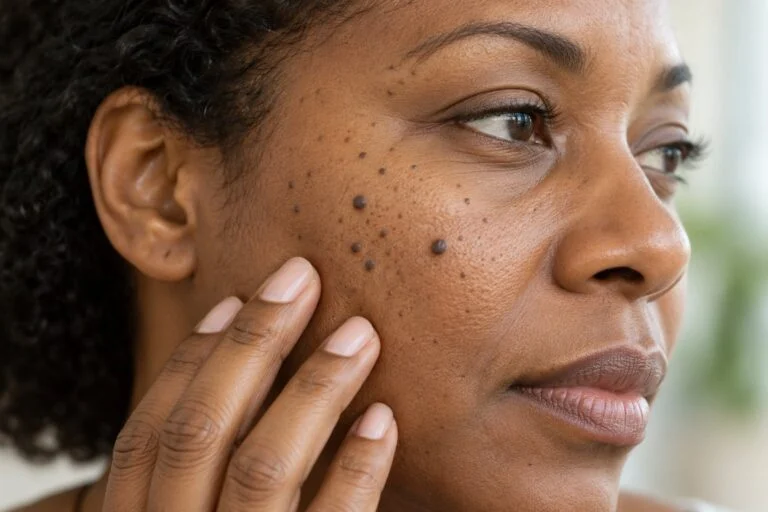
Most skin tags are easy to recognise, but some other growths can look similar. These include warts, moles, seborrhoeic keratoses and dermatosis papulosa nigra (DPN). A home kit can’t tell you what a growth is, and most over-the-counter products aren’t made for delicate areas such as the eyelids or genitals. Cutting or tying off a skin tag yourself can cause bleeding, irritation or infection and may leave a mark. Popular home remedies such as apple cider vinegar aren’t backed by good evidence and can irritate the skin.
As a doctor-led clinic, we check every lesion at a medical consultation before anything is removed. This means treatment can be matched to what the growth actually is. If something doesn’t look like a typical skin tag, we will explain this and advise you on the best next step. Whether or not you are thinking about removal, it’s sensible to see your GP or a doctor about any skin growth that changes in size, shape or colour. You should also have it checked if it bleeds without being caught on anything, or if you’re unsure what it is.
Healing and aftercare
After removal, a small scab may form over the treated spot as the skin heals. Alongside the aftercare advice we give you, it helps to:
- let the scab come away on its own rather than picking it
- keep the area clean
- avoid rubbing from tight collars, bra straps or jewellery over the treated skin while it heals
Removing a skin tag doesn’t stop new ones forming elsewhere, especially where skin rubs against skin. Some people choose to have more skin tags removed in the future. Results vary from person to person, and your suitability for treatment is always assessed at your consultation.
If you have a skin tag you’d like checked or removed, you can book a consultation at our Leamington Spa clinic in Warwickshire. The clinic welcomes patients from Coventry and across the Midlands.


I went to Eve clinics to get a skin tag and DPNs removed. I spoke to Florina and had a consultation with the doctor and they were both really nice and professional. Everything was done the same day and she called me after to check up on me and how I was healing. The skin healed nicely with no scars. They also have very good prices too. Would recommend 5/5.
Ash,