Stretch marks are a common skin concern that can affect both men and women. They often develop after pregnancy, weight changes, puberty, or periods of rapid growth, and can appear on the abdomen, hips, thighs, breasts, upper arms, flanks, and lower back.
At Eve Clinics in Leamington Spa, we offer stretch mark removal using advanced laser treatment tailored to the type and colour of the marks being treated. Depending on your skin and the appearance of the stretch marks, treatment may involve CO2 laser or vascular laser to improve texture, reduce colour contrast, and help the skin look smoother and more even.
Our aim is to achieve a visible improvement in the appearance of stretch marks with a treatment plan designed around your skin, your goals, and the area being treated.
Can Laser Remove Stretch Marks?
Laser treatment cannot usually make stretch marks disappear completely, but it can help make them less noticeable. Over a course of sessions, the aim is for the marks to become smoother and closer in colour to the surrounding skin, so they blend in better. Results vary from person to person, and how much improvement is possible depends on your skin and the type of stretch marks you have.
Newer red stretch marks often respond more readily than older white or silver ones. White stretch marks can still be improved, particularly in texture, but because they are more established, the colour lost within them may not fully return. At your consultation, we will give you an honest view of the improvement you can realistically expect before you decide whether to go ahead.
Treatment Areas
If your stretch marks are in another area, this can be assessed during your consultation.
Stretch Mark Colours Treated
We treat both red and silver stretch marks.
Red stretch marks are usually newer and may still have visible vascular activity within the skin. Silver or white stretch marks are older and more established. The most suitable treatment depends on the colour, age, depth, and location of the marks, as well as your skin type.
Laser Stretch Mark Removal for Darker Skin Tones
Stretch marks can look different on brown and black skin. Newer marks may appear purple or dark brown rather than red, while older marks are often paler than the surrounding skin.
Laser treatment can be considered for darker skin tones, but it needs particular care. Darker skin has a higher risk of pigment changes after laser treatment. This most often shows as darker patches (post-inflammatory hyperpigmentation), which usually fade with time, and less often as lighter patches. Your laser specialist will take your skin type into account when choosing the laser and settings, and a patch test is especially important before a full treatment. We will talk these risks through openly at your consultation and only recommend treatment if it is suitable for your skin.
Treatment Benefits
Stretch Mark Removal with Laser
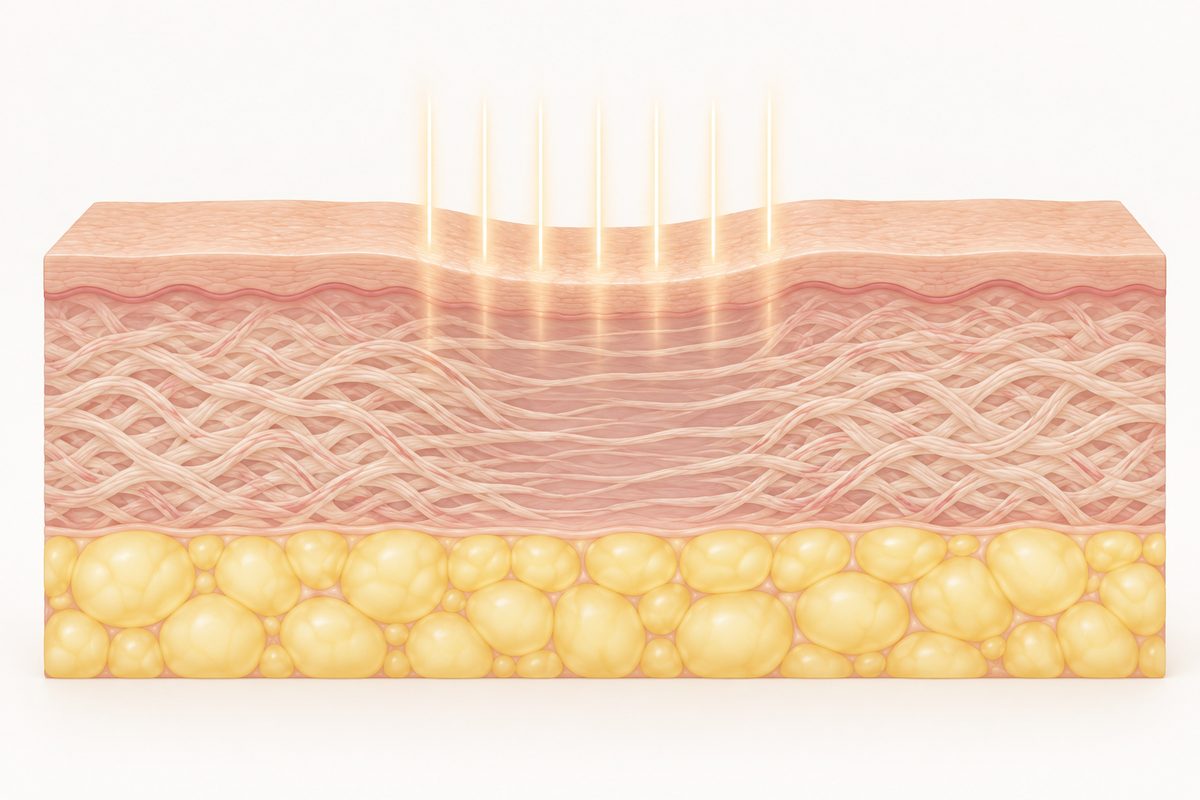
Stretch marks are a form of scarring caused by the skin stretching or shrinking quickly. This can affect the collagen and elastin structure within the skin and lead to visible lines or bands on the surface.
Laser stretch mark removal is one of the most effective clinic treatments for improving the appearance of stretch marks. Treatment works by targeting the affected skin in a controlled way to support skin renewal, improve texture, and reduce the visibility of the marks over time.
At Eve Clinics, treatment is tailored according to the type of stretch marks being treated. This is important because newer red stretch marks and older silver stretch marks often respond best to different laser approaches.
Stretch Mark Removal with CO2 Laser
CO2 laser treatment is often used for older, paler, or silver stretch marks where resurfacing and collagen stimulation are the main goals. The treatment works by creating controlled micro-injury in the affected skin to encourage renewal and support smoother, healthier-looking skin.
This makes CO2 laser stretch mark removal a strong option for patients who want to improve the appearance and texture of more established stretch marks on areas such as the stomach, thighs, hips, breasts, and arms.
Vascular Laser for Red Stretch Marks
Red stretch marks are often newer and may still have visible blood vessels within the skin. In these cases, vascular laser treatment may be used to reduce redness and improve how noticeable the stretch marks appear.
By tailoring treatment to the colour and stage of the stretch marks, we can choose the most suitable approach for your skin and your treatment goals.
What Causes Stretch Marks?
Stretch marks can develop when the skin changes quickly over a short period of time. Common causes include pregnancy, weight gain, weight loss, puberty, rapid growth, and changes in body shape.
They can affect all skin types and all genders. Although stretch marks often fade naturally over time, they do not usually disappear fully on their own.
Stretch Mark Removal After Pregnancy
Pregnancy is one of the most common reasons people seek treatment for stretch marks. The abdomen, hips, breasts, and thighs are especially common areas.
Laser treatment for stretch marks after pregnancy can be a good option for patients who want to improve visible marks that remain after the skin has settled. During consultation, we assess the colour, depth, and age of the stretch marks and advise whether treatment is likely to help.
Consultation and Patch Test
Your treatment starts with a consultation and patch test. This is an important part of planning safe and effective treatment.
At your appointment, we will:
- assess the type and colour of the stretch marks
- review your medical history
- discuss the treatment area and your goals
- explain whether CO2 laser or vascular laser is more suitable
- provide a patch test where needed
- outline the likely number of sessions and costs
This allows us to give honest advice and recommend a treatment plan tailored to your skin.
How Many Sessions Are Needed?
Most patients need a course of treatment rather than a single session. The exact number depends on the age, colour, depth, and size of the stretch marks, as well as the area being treated.
Many patients need around 3 to 5 sessions for best results. Results develop gradually as the skin renews and collagen production continues over time.
Downtime and Aftercare
Downtime depends on the type of laser used and the intensity of treatment.
With CO2 laser treatment, it is common to experience redness, sensitivity, and temporary skin changes while the area heals. With vascular laser treatment for red stretch marks, temporary darkening or bruise-like changes can occur.
Aftercare is important for good healing and good results. We will advise you how to care for the treated area, which may include:
- keeping the area clean and moisturised
- avoiding direct sun exposure
- using high-factor SPF where appropriate
- avoiding harsh skincare products
- following all aftercare advice given by the clinic
Why Choose Eve Clinics for Stretch Mark Removal in Leamington Spa?
Eve Clinics offers stretch mark removal in Leamington Spa using medical-grade laser technology and a personalised treatment plan based on your skin and the type of stretch marks being treated.
Patients choose Eve Clinics for:
- consultation-led treatment planning
- treatment tailored to red and silver stretch marks
- CO2 laser and vascular laser options
- treatment by an experienced laser specialist
- a focus on suitability, safety, and realistic outcomes
- convenient treatment in Leamington Spa for patients across Warwickshire
If you are looking for stretch mark removal in Leamington Spa or Warwickshire, we can assess your skin and advise whether laser treatment is suitable for you.
Stretch Mark Treatment Options: Laser, Creams or Surgery?
If you are comparing ways to improve stretch marks, it helps to know what each option can realistically offer:
- Creams, oils and lotions can keep the skin moisturised and comfortable, but there is limited evidence that they make established stretch marks fade.
- Laser treatment is non-surgical. Over a course of sessions, it aims to improve the texture, colour and visibility of stretch marks, with much less downtime than surgery.
- Surgery, such as a tummy tuck (abdominoplasty), removes a section of skin, so any stretch marks on that skin are removed with it, while marks outside that area remain. It is a major operation carried out under general anaesthetic, with a longer recovery and a scar, and is usually considered for loose, excess skin rather than for stretch marks alone.
If you are thinking about surgery mainly because of stretch marks, a consultation can help you understand whether non-surgical laser treatment may be suitable instead. If loose skin is also a concern, you are welcome to ask about our skin tightening treatments.
How Much Does Laser Stretch Mark Removal Cost?
The cost of laser stretch mark removal depends on:
- the size of the area and how many areas are treated
- whether CO2 laser or vascular laser is recommended
- how many sessions your stretch marks are likely to need
You can see our current prices on our price list. As everyone’s stretch marks are different, we confirm the cost of your personal treatment plan at your consultation, before you decide whether to go ahead. Stretch mark treatment is considered cosmetic, so it is not usually available on the NHS.
Stretch mark removal is also available at our Harley Street clinic in London. To discuss your options in Leamington Spa, book a consultation with our team.
Frequently Asked Questions
Stretch marks often begin as red, pink, purple, or brown lines depending on skin tone and how new they are. Over time, they usually fade and may become lighter or silver in appearance.
Yes. Stretch marks are a form of scarring that develops when the skin stretches or shrinks quickly and the underlying structure of the skin is affected.
Stretch marks can be caused by pregnancy, puberty, weight gain, weight loss, muscle growth, and other rapid body changes.
Laser treatment can improve the appearance of stretch marks by reducing visible contrast, improving texture, and supporting skin renewal. The level of improvement varies depending on the type of stretch marks and your skin.
The best treatment depends on whether the stretch marks are newer and red or older and silver, as well as your skin type and the area being treated. A consultation helps determine the most suitable option.
Yes. Older stretch marks can often be treated, especially where the goal is to improve texture and reduce how visible they appear.
A consultation and patch test are important before treatment. If vascular laser may be used, the skin should be free from tan or fake tan. We also advise keeping the skin well hydrated and avoiding prolonged direct sun exposure before treatment.
After treatment, it is important to follow the aftercare advice given by the clinic. This may include keeping the area clean, avoiding heat and sun exposure, using suitable skincare, and allowing the treated skin to recover naturally.
The recommended gap between sessions will depend on the type of stretch marks and the treatment used. This will be discussed during consultation as part of your treatment plan.
Yes. Stretch marks are very common and can affect both men and women.
Stretch marks often fade over time, but they do not usually disappear fully on their own.
As with any laser procedure, there are risks and possible side effects. These can include temporary redness, swelling, pigmentation change, and, more rarely, scarring. These risks will be discussed during consultation.
No treatment can guarantee complete removal. The goal is to achieve a visible improvement in the appearance of the stretch marks, and results vary from person to person.
Treated stretch marks in the same area are not usually expected to return in the same way, but new stretch marks can develop in the future if the skin is affected again by pregnancy, growth, or significant weight changes.
We use medical-grade laser technology and tailor treatment according to the type of stretch marks being treated. Our approach is consultation-led, with a strong focus on safety, suitability, and realistic outcomes.
As with any laser treatment, risks can include temporary redness, swelling, pigmentation changes, and, more rarely, scarring. These risks are discussed during consultation.
Stretch Mark Areas