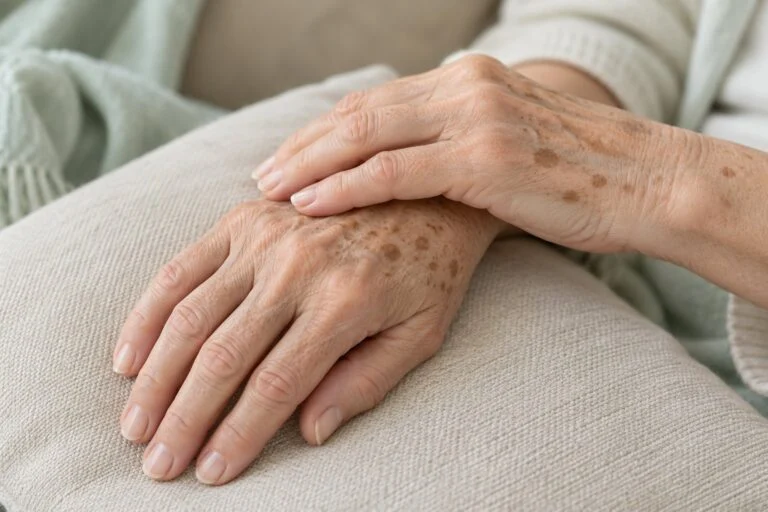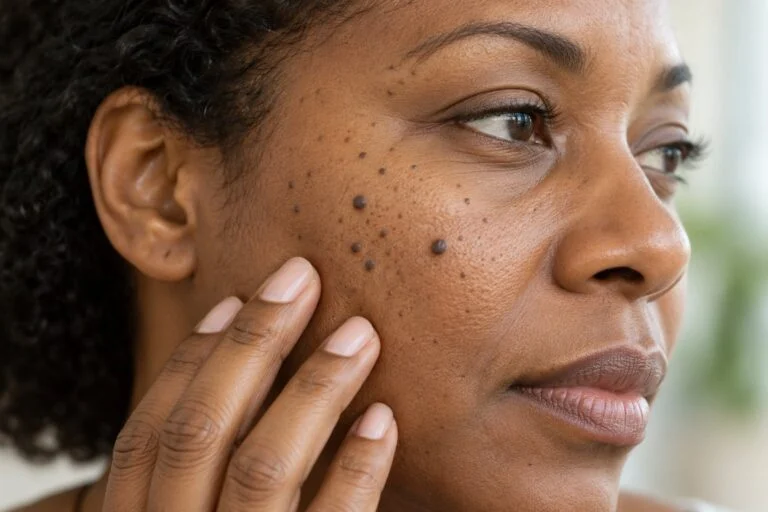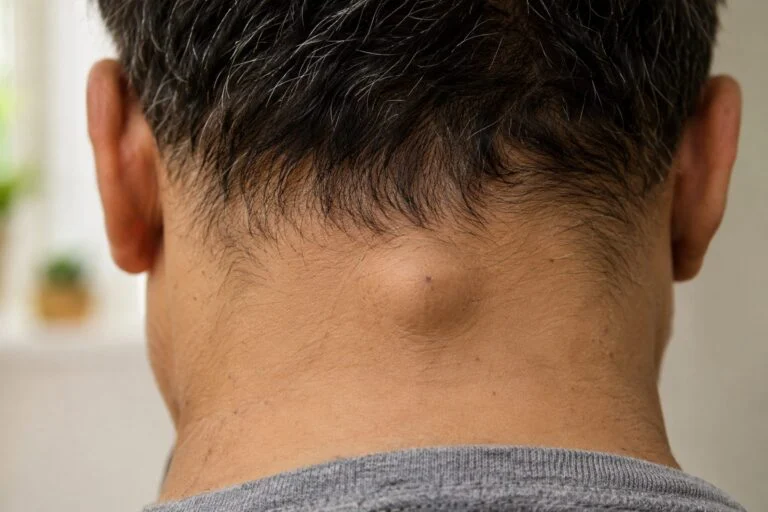
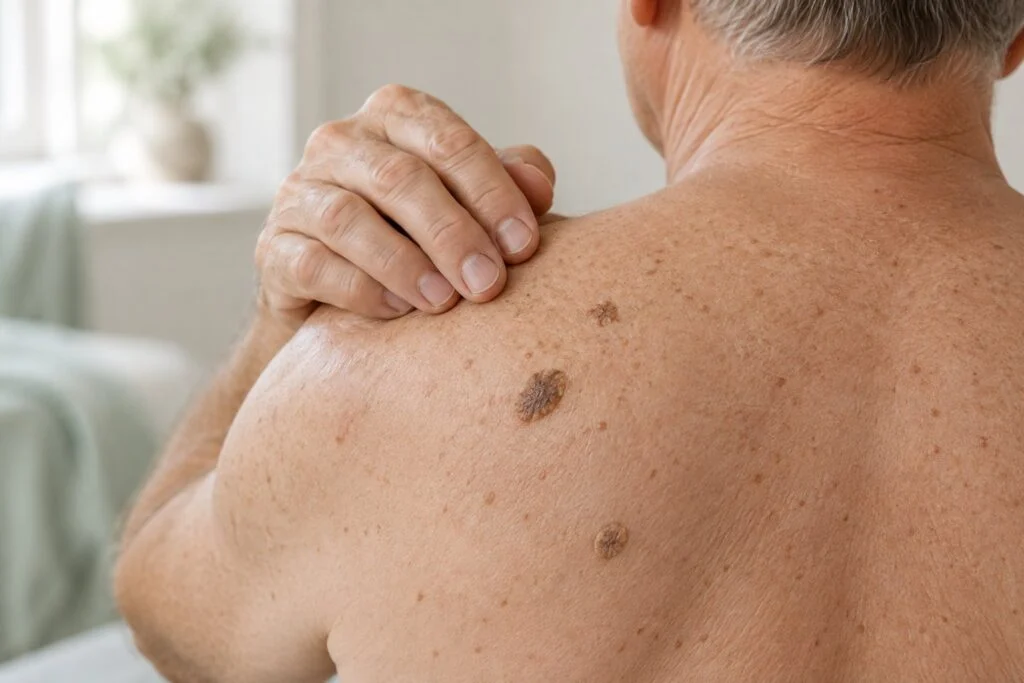
Seborrhoeic Keratosis lesions are dark, benign skin growths that appear in adulthood. They are also known as Basal Cell Papillomas or Seborrhoeic Warts and can appear on any part of the body, however most often found on the face and neck area. All skin types can develop these lesions and there are a number of Seborrhoeic Keratosis removal treatments. We use the DEKA SmartXide Touch CO2 laser at our Leamington Spa clinic. The laser aims to keep discomfort low and reduce the risk of scarring, although some risk remains.
Seborrhoeic Keratosis removal at our clinic in Leamington Spa involves using the DEKA SmartXide Touch CO2 ablative laser. Seborrhoeic Keratosis lesions are a skin concern that develops as a result of ageing and looks like a warty spot, often dark brown. They can appear on all skin types and often start to appear after the age of 50. Seborrhoeic Keratosis lesions can either be raised or flat to the skin. They can appear on just about any part of the body and are harmless, not usually causing any pain or discomfort. It is important to have suspected Seborrhoeic Keratosis checked by a Doctor to rule out any more concerning skin conditions or melanoma.
The cause of Seborrhoeic Keratosis is unknown and although they are normally harmless, they can affect a patient’s self-confidence. They are benign (non-cancerous) growths of the outer layer of skin. It is also suggested that excessive sun exposure can increase the chances of developing Seborrhoeic Keratosis. Patients with lesions should never pick or scratch the area as this can lead to scarring and bleeding.
Seborrhoeic Keratosis or Basal Cell Papillomas can appear in groups and more often than not, patients will have multiple lesions on the body. They normally appear on the face, scalp and neck area.
Seborrhoeic Keratosis can be removed quickly with little downtime, using the DEKA SmartXide Touch CO2 ablative laser. The laser precisely targets the lesion and limits the effect on the surrounding skin. No scalpel is used and bleeding is usually minimal. Our in house doctor assesses you first, and then our laser specialists carry out the treatment. The CO2 laser can also be used for suitable Seborrhoeic Keratosis lesions around the eye area, although you may have temporary blurred vision afterwards.
Prior to your Seborrhoeic Keratosis removal treatment, you will attend a medical consultation with our Doctor. He will assess the lesion to rule out any other skin conditions and check whether the lesion is suitable for removal. During your medical consultation, we will provide you with the aftercare you need to follow after the procedure and also the estimated number of sessions needed to completely remove the lesion. We aim to remove the entire lesion to reduce the chance of it coming back. To make the procedure more comfortable, we will give you a numbing injection or cream.
The procedure will take around 20 minutes depending on the number of lesions that need to be removed. Most people can return to many normal activities soon after treatment, but the skin needs time to heal. You may have some redness and swelling, then a fine scab that usually comes off in about a week. Avoid swimming pools, saunas and hot baths for up to one week. If the area is near your eyes, do not drive in the hours after treatment.
The CO2 laser allows precise removal, although results vary from person to person. We use the DEKA SmartXide Touch medical CO2 laser, and our team is trained in laser lesion removal.
If a treated lesion comes back within 3 months, we offer a review and, where your doctor feels it is appropriate, retreatment at no extra cost. If scarring occurs, we also offer scar management treatments, which may improve its appearance. Please see the scar management page here.
Eve Clinics in Leamington Spa is a medical clinic offering lesion removal to patients in Warwick, Coventry, Southam and surrounding areas.


3 prominent facial moles removed. Amazing results. Fiorina is a lovely person, puts you at ease straight away. Very accommodating. Pain free procedure.
Joy,