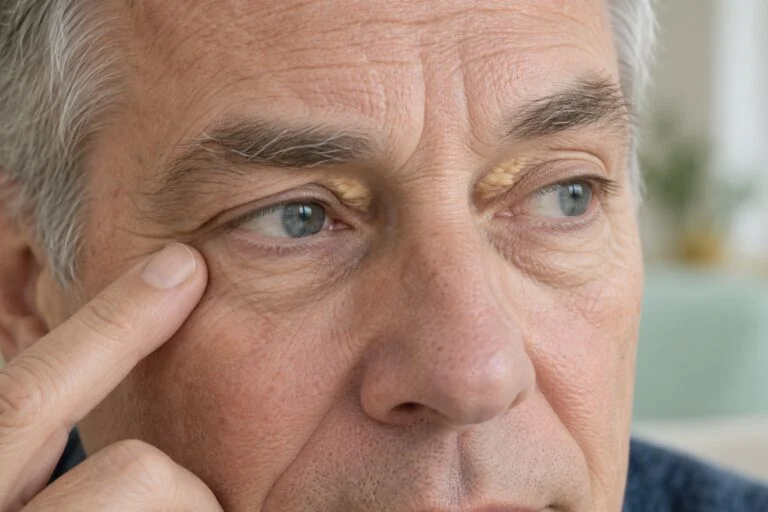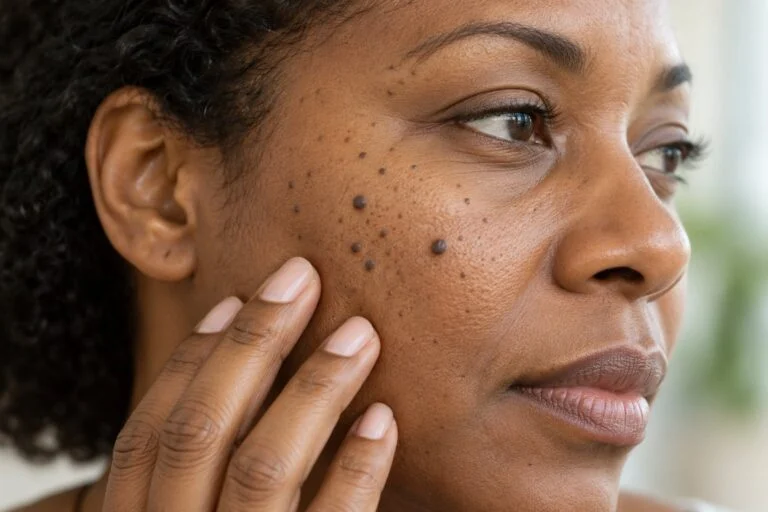
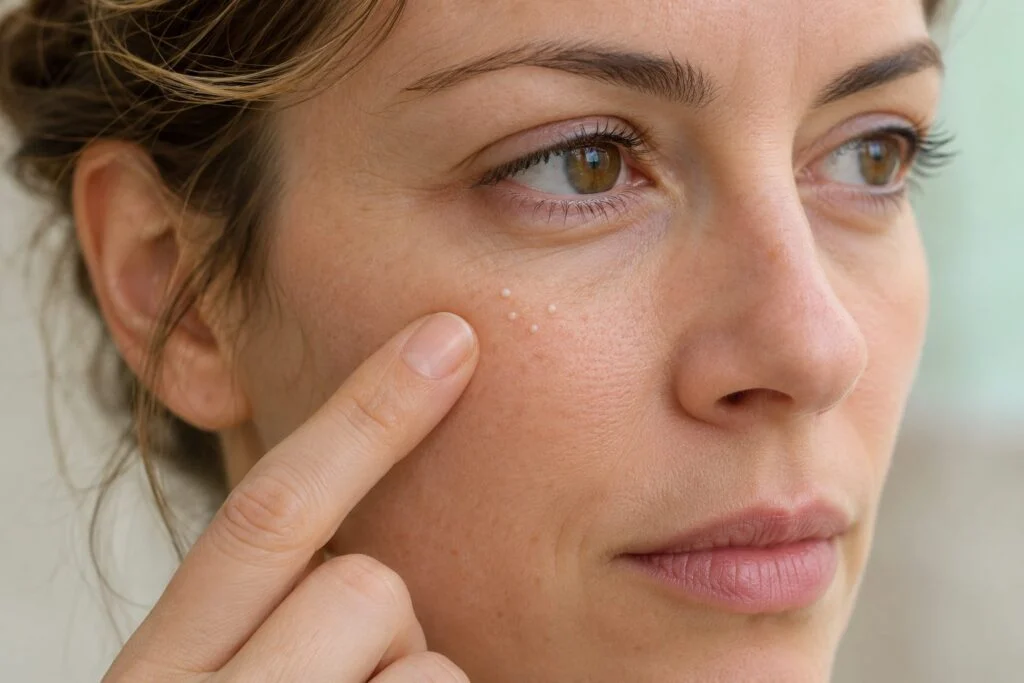
Milia are tiny white or yellowish bumps that sit just under the surface of the skin. They often appear around the eyes, on the eyelids and on the cheeks. Milia are usually harmless, but many people would like them removed.
At our Leamington Spa clinic, milia removal is carried out by our doctors. Any spot that changes or looks unusual should be checked by a doctor first. That is why your doctor looks at your skin before any treatment.
What are milia?
Milia are tiny, firm bumps that sit just under the surface of the skin. They are usually white or yellowish and about the size of a pinhead.
Each one forms when keratin, a natural protein in the skin, gets trapped in a small pocket under the surface. Milia do not usually hurt and are not contagious. They can affect people of any skin type.
What causes milia?
Many milia appear for no clear reason. Others form after the skin has been damaged, for example by a burn, blistering or some skin treatments. Long-term sun damage and heavy skin creams may also play a part for some people.
Who is milia removal for?
Milia are usually harmless, so there is often no medical need to remove them. Some people choose removal because the spots bother them. Others want them gone because they sit somewhere they notice every day, such as around the eyes.
Any spot that changes or looks unusual should be checked by a doctor first. That includes a spot that grows, bleeds, itches or changes colour. At your consultation, your doctor looks at every spot before anything is removed. If a spot is not milia, or needs a different kind of check, your doctor will tell you what it is and what to do next.
Fordyce spots vs milia: how to tell them apart
Milia and Fordyce spots can look alike, but they are different things.
- Milia are tiny pockets of trapped keratin under the skin. They are often found around the eyes, on the eyelids and on the cheeks. They feel firm to the touch.
- Fordyce spots are small oil glands that can be seen through the skin. They are often pale yellow and tend to appear on the lips or genital skin. They are also usually harmless.
Whiteheads and small cysts can look similar too. A doctor can tell them apart when they see your skin.
Milia on the testicles or scrotum
Small white or yellow spots on the testicles or scrotum are a common worry. They can be milia, but they can also be Fordyce spots or small scrotal cysts. These look very similar, so a doctor needs to check them before any treatment is discussed.
Intimate checks at Eve Clinics are carried out by our doctors, in private and with care. Your doctor will explain what the spots are and whether treatment is an option for you.
How milia removal works
Milia sit under a thin layer of skin, so squeezing them at home rarely works. It can also damage the skin and may lead to redness, infection or marks. In clinic, a doctor can remove them with care.
Your doctor will first confirm that your spots are milia. They will then explain the removal method that suits your skin and the area being treated. They will also tell you how long it takes, how it may feel and how many sessions you may need.
What to expect
Your consultation
Your doctor will ask about your medical history and look closely at each spot. They will talk you through your options, the possible risks and the cost. You can ask any questions before you decide.
On the day
Your doctor will explain each step before they start. The time it takes depends on how many spots are treated and where they are.
Aftercare
Your doctor will tell you how to care for your skin after treatment and what is normal while it heals. If you have any worries afterwards, you can contact us.
Risks and results
As with any skin procedure, there are some risks. For example, the skin may be red for a short time or change colour slightly. Less often, a small mark, scar or infection can happen. Your doctor will explain the risks for your skin before any treatment goes ahead.
Results vary from person to person. Treatment aims to remove the milia your doctor treats, and some spots may need more than one session. New milia can still form in other places over time.
Milia removal in Leamington Spa
Milia removal is available at our Leamington Spa clinic in Warwickshire. Our clinic welcomes patients from across Warwickshire and the wider Midlands. The cost depends on how many spots are treated, and the price and number of sessions are discussed at consultation. You can also see our price list.
You can find more of our mole and lesion removal treatments in our treatments section. When you are ready, you can book a consultation.