An epidermoid cyst is a small, round lump under the skin. Many people call it a sebaceous cyst. These cysts are common and usually harmless. Some people still choose to have one removed because it gets in the way, keeps becoming inflamed or simply bothers them.
At our Leamington Spa clinic, one of our doctors examines the lump first. They explain whether removal is suitable and which method may suit you. You can then take time to decide.
What is an epidermoid cyst?
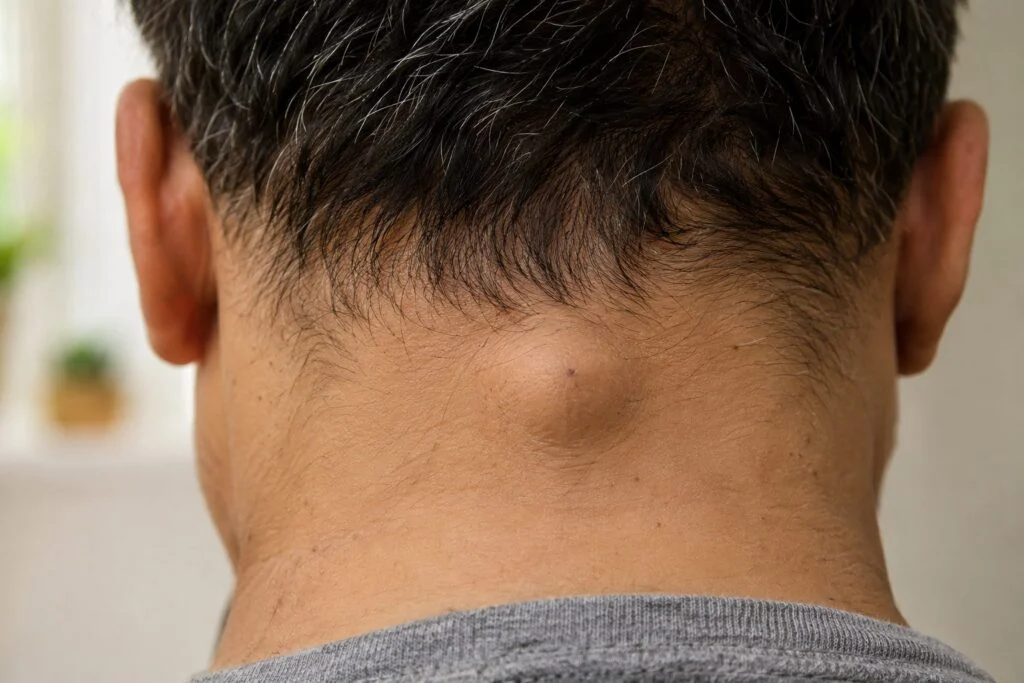
An epidermoid cyst is a small sac under the skin. The sac has a lining like the top layer of your skin. This lining keeps making keratin, a soft protein that skin is made from. The keratin builds up inside the sac, so the cyst can slowly grow.
These cysts often appear on the face, neck, chest, back, shoulders or behind the ears. You may notice:
- a smooth, round lump that moves slightly when you press it
- a small dark dot on top, which is a blocked pore
- a thick, cheesy material with an unpleasant smell if it leaks
- slow growth over months or years
Epidermoid cyst or sebaceous cyst?
People often use the two names for the same thing. “Sebaceous” suggests the cyst is filled with sebum, the oil your skin makes. In fact, most cysts people call sebaceous are epidermoid cysts and contain keratin. A cyst on the scalp is often a pilar cyst, which is a close relative. Your doctor will examine the lump and tell you which type it is likely to be.
When to get a lump checked
Most epidermoid cysts cause no harm. It is still sensible to get any new lump checked, because other lumps can look similar. Speak to your GP or a doctor if a lump:
- grows quickly or changes shape
- becomes red, hot, swollen or painful
- leaks pus or blood
- feels hard or fixed in place
- keeps coming back after it has gone down
If a cyst is very painful and you feel unwell or have a high temperature, contact your GP or NHS 111 the same day. An infected cyst may need treating first. Removal is usually planned once the area has settled.
Try not to squeeze or pop a cyst at home. This can push the contents deeper, cause infection and leave a scar. The sac also stays behind, so the cyst often fills up again.
Who might consider cyst removal?
Many cysts can simply be left alone. The NHS may not remove a harmless cyst for cosmetic reasons. You might consider private removal if your cyst:
- catches on clothing, a bra strap or a comb
- keeps becoming inflamed or sore
- is on your face, neck or another visible area and it bothers you
- is slowly getting bigger
Removal is not right for everyone. Your doctor will ask about your medical history and any medicines you take, and will examine the cyst itself. Suitability is always assessed at your consultation.
How cyst removal works at Eve Clinics
Your consultation
Your doctor will examine the lump and ask how long you have had it. They will explain whether removal is suitable, what it involves and the possible risks. You can ask any questions before you decide.
If a lump looks unusual, your doctor will talk to you about the next steps. This may mean removing it so it can be tested in a laboratory (histology), or referring you back to your GP.
CO2 laser or minor surgery
Our doctors remove cysts in one of two ways. One uses our SmartXide Touch CO2 laser. The other is minor surgery, where the doctor makes a small cut over the cyst. Your doctor will advise which suits you, based on the size and position of your cyst.
Whichever method is used, the aim is to remove the whole sac, not just what is inside it. A cyst caused by an active sebaceous gland may still come back.
On the day
- Your doctor checks the cyst again and confirms you are happy to go ahead.
- The area is numbed with a local anaesthetic. You stay awake, and you may feel some pushing or pulling.
- Your doctor removes the cyst using the method you agreed.
- The wound is covered with a dressing. If you have stitches that need to come out, your doctor will tell you when.
- You are given aftercare advice before you go home.
Recovery and aftercare
Most people can go home straight after the procedure. Recovery is usually simple, but everyone heals differently. You can typically expect:
- some tenderness, swelling or bruising for a few days
- to keep the dressing clean and dry as your doctor advises
- to avoid heavy exercise or rubbing the area while it heals
- a small scar that tends to fade over time
Your doctor will give you aftercare advice for your own wound. If you notice spreading redness, heat, pus or worsening pain, contact the clinic or your GP.
Possible risks
Cyst removal is a common minor procedure. Like any procedure, it has some risks. These include:
- a scar, which may be raised or wider in some people and some areas of the body
- infection of the wound
- bleeding or bruising
- the cyst coming back, which can happen when it is caused by an active sebaceous gland
- numbness or a change in feeling around the scar
Your doctor will talk you through the risks that apply to you before you agree to go ahead. If you are unhappy with a scar later on, our scar removal page explains options that may help.
Other skin lumps and lesions
Not every lump is a cyst. Skin tags, keratoses and moles look different and need a different approach. You can read more about skin tag removal, keratosis removal and CO2 laser mole removal, or see all our mole and lesion removal treatments.
Book a cyst consultation in Leamington Spa
Eve Clinics is a CQC-regulated clinic. Cyst removal is carried out by our doctors at our Leamington Spa clinic. You can see current prices on our price list and meet the team on our Our Specialists page. When you are ready, book a consultation and your doctor will advise whether removal is right for you.