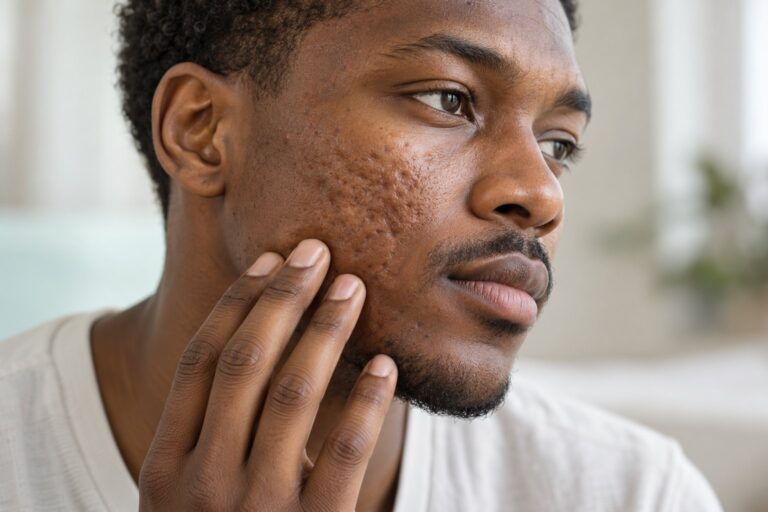

Acne that keeps coming back can affect how you feel about yourself, not only your skin. Creams and courses of antibiotics help many people, but for some the spots return once treatment stops.
Our 3-month acne programme for adults looks at what may be behind your acne. Hormones, blood sugar, diet, sleep and stress can all play a part. Before your first appointment we arrange blood tests. A GP then goes through the results with you, examines your skin and agrees a plan with you.
Where it will help, your GP may prescribe treatment. They always talk it through with you first, including the benefits and possible side effects. Alongside this you get practical advice on skincare, nutrition, gut health, sleep and stress, so you have a plan you can keep up after the programme.
What is included
- Three 30-minute appointments with a GP, one a month, in person at our clinic
- A review of your blood test results with your GP
- Any acne medicines your GP prescribes during the programme, if you need them after your consultation
- Your treatment adjusted as you go, if it needs to be
- A long-term plan for skincare, diet and ongoing care to help keep breakouts under control
The blood tests themselves are priced separately. We tell you the cost before they are taken. The programme is for adults aged 18 and over.
Your three months
- Month 1 (30 minutes): your GP goes through your blood test results, examines your skin and asks about your history. If treatment is right for you, you start it.
- Month 2 (30 minutes): your GP checks how your skin is responding and how you are getting on with treatment, and changes the plan if needed.
- Month 3 (30 minutes): your GP reviews your progress and gives you a long-term plan for skincare, diet and ongoing care.
The blood tests
Before your first appointment we arrange blood tests to check your general health and your hormones. Your GP explains every result to you. The tests are:
- Full blood count (FBC)
- Liver function tests (LFTs)
- Kidney function (U&Es)
- Total and free testosterone
- Sex hormone-binding globulin (SHBG)
- Blood sugar (HbA1c or a fasting glucose test)
- Thyroid function (TSH)
- DHEA-S and 17-OH progesterone, if your GP thinks a hormone condition such as polycystic ovary syndrome (PCOS) may be involved