
Stretch marks affect a large portion of the population. If you have been affected by them, you may know they are often linked to pregnancy, puberty or weight gain and loss. You might be wondering exactly how they form and why. This article aims to answer these questions.
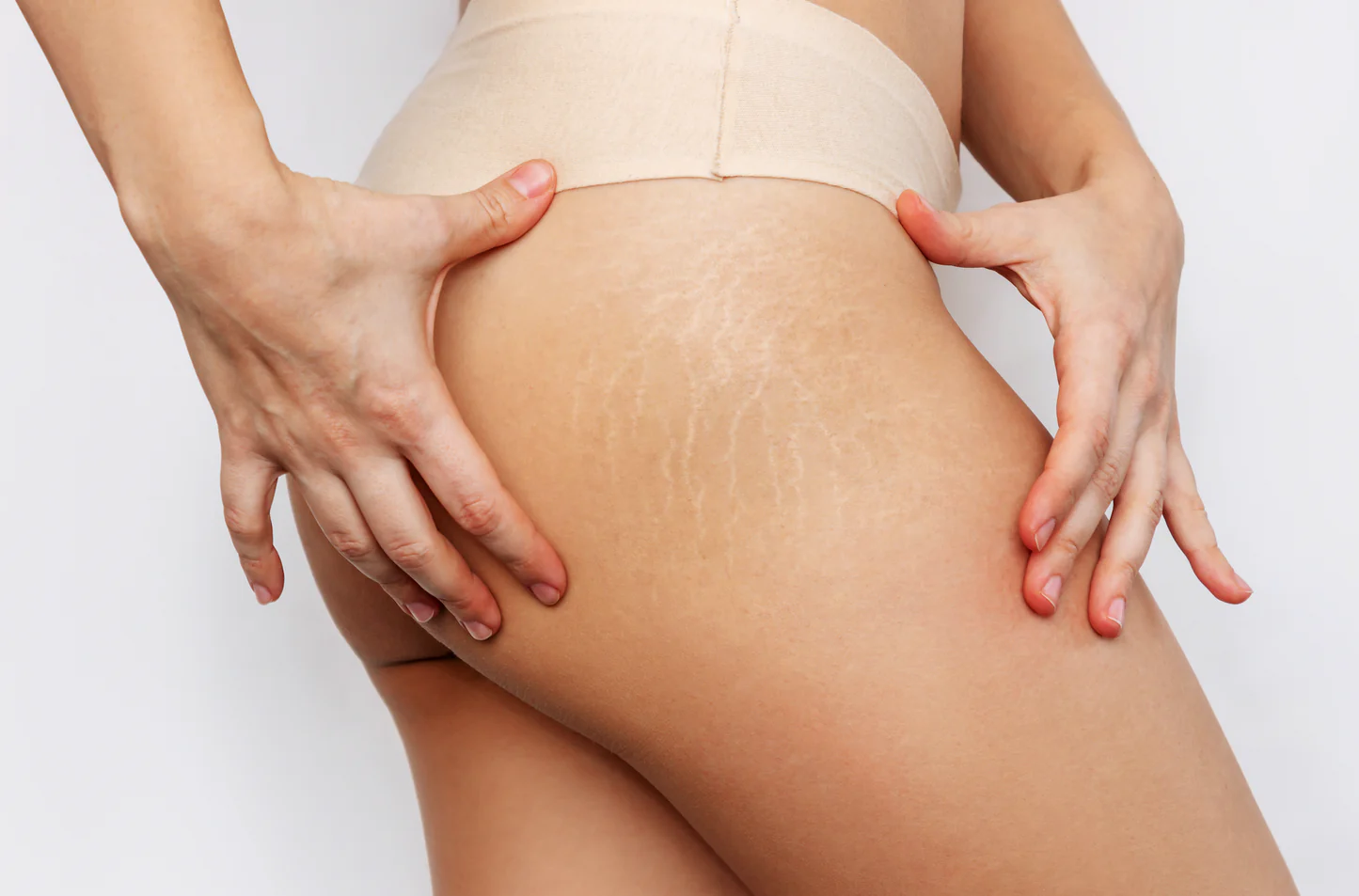
Stretch marks, known as striae in medical terms, are visible lines on the skin surface, often appearing as streaks. They are most commonly found in areas that undergo rapid stretching due to various physiological changes. A deep look into the skin’s intricate processes is needed to grasp the reasons for their formation.
The Skin’s Structure
The skin consists of three primary layers: the epidermis, dermis, and subcutaneous layer. Stretch marks arise in the dermis, which houses a complex collagen and elastin fibres network. These proteins are integral to the skin’s resilience and flexibility.
The Start of Stretch Marks: Skin Stretching
The primary cause of stretch marks is the rapid stretching of the skin, commonly triggered by pregnancy, puberty, and sudden shifts in body mass. This sudden expansion puts the dermis under considerable stress, particularly affecting its collagen and elastin network.
Collagen and Elastin: Under Microscopic Strain
Collagen, providing firmness, and elastin, offering elasticity, undergo significant changes during rapid skin stretching. They are stretched beyond their capacity, leading to microscopic tears in the dermal layer. This damage disrupts collagen fibres’ normal, orderly arrangement, causing them to realign irregularly. This irregularity results in the characteristic lines of stretch marks.
The Visible Transformation: Color and Texture Changes
New stretch marks, or striae rubra, initially appear as reddish or purple lines due to the underlying blood vessels visible through the thinned dermis. Over time, as the healing process progresses, these marks fade to a paler, scar-like appearance, known as striae alba. The pale colour is due to the reduced blood flow and the thinning of the epidermis over the area.
Biological Factors Influencing Stretch Marks
Puberty
During puberty, the body experiences a hormone surge like estrogen and testosterone. These hormonal changes can cause rapid growth, leading to skin stretching. The skin may struggle to keep pace with this growth, resulting in the formation of stretch marks.
Pregnancy
Pregnancy significantly alters hormone levels, particularly estrogen and relaxin. Relaxin, produced by the placenta, softens the collagen in the skin, making it more susceptible to stretching. Combined with the physical expansion of the abdomen to accommodate the growing fetus, the skin is highly prone to developing stretch marks.
Menopause
Decreased estrogen levels during menopause can reduce collagen production, a key component for skin elasticity. This reduction can make the skin thinner and less elastic, increasing the likelihood of stretch marks as the skin struggles to adapt to body size or shape changes.
Cortisol Levels
Raised cortisol, a stress hormone, can also play a part, for example from long-term steroid medication or, rarely, a hormonal condition such as Cushing’s syndrome. Cortisol can weaken the elastic fibres in the skin, making it more prone to tearing when stretched. If stretch marks appear suddenly or widely without an obvious cause, please see your GP.
Prevention and Management
There is limited evidence that any cream, diet or level of hydration reliably prevents stretch marks. Keeping skin moisturised may help with comfort and itching. Where possible, changing weight gradually may reduce rapid stretching of the skin. Some studies suggest retinoid creams may slightly improve the look of new, red stretch marks. Retinoids are not suitable during pregnancy or breastfeeding, so please speak to a doctor or pharmacist before using one. Laser treatments, such as fractional CO2 laser, aim to stimulate new collagen and may improve the texture and look of stretch marks. Stretch marks rarely disappear completely, and results vary. You may need more than one session, and there is some recovery time afterwards. We discuss your suitability, likely results and risks at your consultation.
Signs of Skin’s Resilience and Change
Stretch marks are the visible manifestations of the skin’s adaptive response to rapid stretching. Understanding their physiological basis provides insight into their management and treatment. Often viewed as an aesthetic concern, they are a natural part of the body’s response to change and growth.
Treatment options at Eve Clinics
If your stretch marks bother you, treatments such as CO2 laser at our CQC-regulated clinic may help improve how they look. Results vary, and your suitability is assessed at consultation. Please get in touch if you would like to explore your options.