Light Skin Type – Laser Hair Removal
Alexandrite laser hair removal tailored to lighter skin types, using our Candela GentleMax Pro. A course typically gives long-term hair reduction. Find out how it works and whether it suits you.
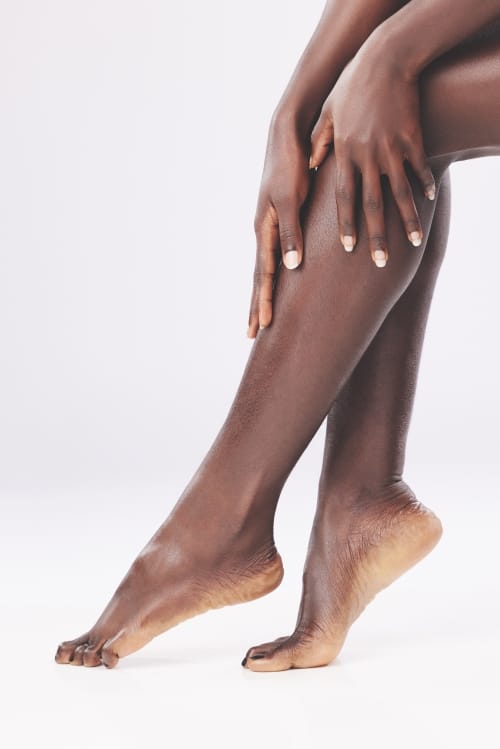
Dark Skin Type – Laser Hair Removal
Laser hair removal tailored to darker skin types, with the laser wavelength and settings chosen to suit your skin. Find out what treatment involves and whether it’s right for you.
Laser hair removal in Leamington Spa, Warwickshire
Eve Clinics is a doctor-led clinic offering laser hair removal for both lighter and darker skin types, using the Candela GentleMax Pro laser. Because everyone’s skin and hair are different, treatment starts with a consultation, so we can recommend the right approach for you.
Laser hair removal, laser hair reduction or laser epilation – what’s the difference?
Laser hair removal, laser hair reduction, laser epilation and laser depilation are all names for the same non-surgical treatment, in which pulses of laser light target hair follicles beneath the skin. Strictly speaking, epilation means removing hair from the root and depilation means removing it at the skin’s surface. Laser works at the root, but in everyday use the terms are interchangeable.
The term laser hair reduction is often preferred because it describes what to expect more accurately. A course of treatment typically gives long-term reduction in hair growth, and any hairs that do grow back may be finer and lighter. It doesn’t remove every hair, though, and some people choose occasional top-up sessions to maintain their results. Results vary, and we’ll talk through realistic expectations for your skin and hair at your consultation.
Laser hair removal is sometimes described as laser surgery, but no incisions, stitches or general anaesthetic are involved. Many people go back to their usual routine the same day, although the treated skin may look a little red or feel warm for a short while afterwards.
How laser hair removal works
The laser delivers short pulses of light that are absorbed by the pigment (melanin) in each hair. This energy turns into heat, which travels down the hair to the follicle and reduces its ability to grow new hair. Settings are chosen to target the hair while limiting heat to the surrounding skin.
Hair grows in cycles, and only hairs in their active growth phase respond well to laser. Because hairs are at different stages at any one time, treatment is given as a course of sessions spaced several weeks apart, so that each session can treat a new set of actively growing hairs. Your practitioner will advise how many sessions you’re likely to need, as this depends on the area, your hair and your skin.
As the laser works on the hair root, waxing, plucking and threading are usually avoided during a course. You’ll be given clear advice on preparing for treatment and on aftercare before your first session.
How your skin and hair type guide the choice of laser
Because laser hair removal targets pigment, the right laser and settings depend on your skin tone and hair colour. The Candela GentleMax Pro combines two laser wavelengths – Alexandrite and Nd:YAG – so treatment can be matched to your skin type:
- Lighter skin types: the Alexandrite wavelength is often used. Find out more about Alexandrite laser hair removal.
- Darker skin types: the longer Nd:YAG wavelength is generally preferred, as less of its energy is absorbed by pigment in the surface of the skin. Find out more about laser hair removal for dark skin types.
Hair colour matters too. Laser tends to be more effective on darker hair, while very fair, blonde, red, grey or white hairs contain little pigment and may not respond well. We’ll assess this at your consultation and tell you honestly whether laser is likely to help.
Can laser hair removal help with ingrown hairs?
An ingrown hair is one that curls back or grows sideways into the skin instead of growing up and out of the follicle. Ingrown hairs often appear as small, raised, red or itchy bumps – sometimes called razor bumps when they follow shaving – and are common after shaving, waxing or plucking, particularly on the face and neck, underarms, bikini line and legs, and in people with coarse or curly hair.
Because a course of laser hair removal typically reduces the number of hairs, and regrowth may be finer, it may help reduce ingrown hairs for some people. It can also mean less need to shave, wax or pluck. Results vary from person to person, and whether laser is suitable for you is assessed at consultation.
If the skin is very sore or swollen, or looks infected, please speak to your GP or a pharmacist first. We may advise waiting until the skin has settled before starting laser treatment.
Booking a laser hair removal consultation
If you’re looking for laser hair removal near you, our Leamington Spa clinic welcomes patients from across Warwickshire and the wider Midlands. At your consultation we’ll look at your skin and hair, ask about your medical history and any medicines you take, discuss the areas you’d like treated and explain what a course is likely to involve, so you can decide with confidence.
Like any laser treatment, laser hair removal has some possible risks and side effects, which we’ll explain before you go ahead. You can read more about them on our blog.
You’ll find clinic details on our Leamington Spa page and treatment prices on our price list, and you can find out more about our specialists. When you’re ready, book a consultation online, or contact us with any questions.
More questions about laser hair removal
How many laser hair removal sessions will I need?
Most people need a course of several sessions rather than a single treatment. Sessions are spaced several weeks apart, so each one can treat a new set of hairs in their growth phase. How many you need depends on the area, your hair colour and thickness, your skin type and your hormones. Areas where hair growth is driven by hormones, for example the face, may need more sessions. After a course, some people choose occasional top-up sessions to keep regrowth down. Your practitioner will suggest a plan for you at your consultation, and you can see treatment prices on our price list.
Does laser hair removal hurt?
Most people feel a quick snap against the skin with each pulse, along with some warmth. How it feels varies from person to person and from one area of the body to another. The Candela GentleMax Pro has built-in cooling, which helps keep your skin comfortable during treatment. Your practitioner will check in with you throughout, so please tell them how you are feeling.
Laser hair removal for PCOS and for transgender patients
Some people have extra hair growth linked to polycystic ovary syndrome (PCOS), for example on the chin, face or neck. Laser does not treat PCOS itself, but a course may help reduce unwanted hair. Hormones can keep prompting new growth, so you may need more sessions and occasional top-ups. Please speak to your GP about PCOS itself.
We also welcome transgender and non-binary patients who would like to reduce facial or body hair. Your consultation is private, and we will talk through your goals, your skin and hair, and whether laser is likely to suit you.